
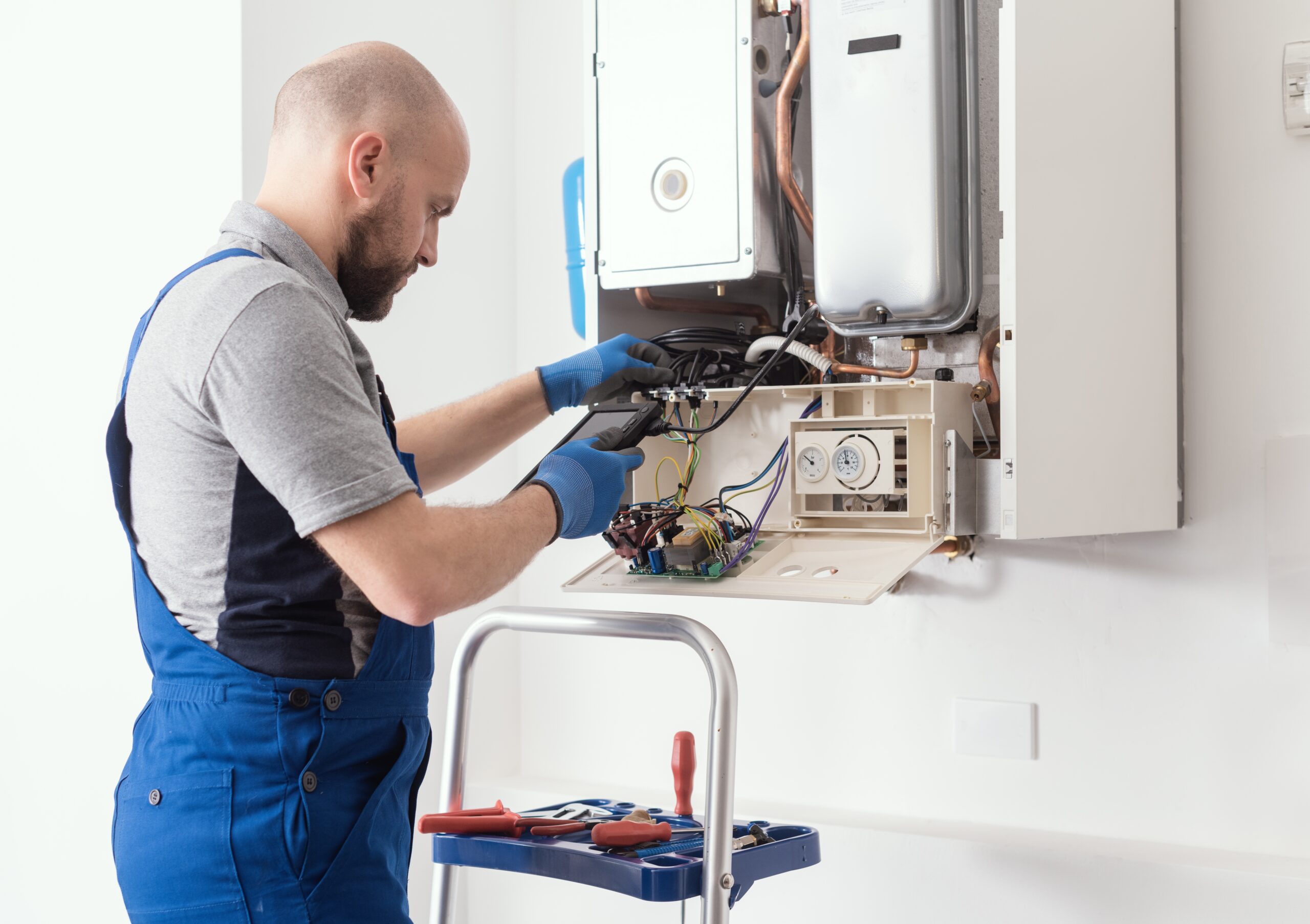
Boiler problems in a rental property can quickly become stressful for both landlords and tenants. Heating and hot water are essential, especially during the colder months, and when something goes wrong it is important to know who is responsible for sorting it out.
In most cases, the landlord is responsible for boiler repairs in a rental property. If the boiler is part of the property and has been provided by the landlord, the landlord must keep it in proper working order. Tenants also have responsibilities, such as reporting faults promptly, using the heating system properly and allowing reasonable access for repairs.
At R&S Heating Services, we work with landlords, tenants and letting agents who need clear advice and reliable heating support. As local plumbers in Maidenhead, we understand how important it is to deal with boiler problems quickly, safely and properly.
The landlord’s responsibility for boiler repairs
Landlords have a legal duty to keep heating and hot water systems in repair and proper working order. This usually includes the boiler, radiators, pipework, hot water cylinder if there is one and controls such as thermostats and timers.
If the boiler breaks down because of age, wear and tear or a fault with the appliance, the landlord is normally responsible for arranging and paying for the repair. This applies whether the property is managed directly by the landlord or through a letting agent.
A landlord cannot usually pass the cost of normal boiler repairs to the tenant. The heating system is part of the property, and it must be maintained so the tenant can live in the home safely and comfortably.
For example, if the boiler stops producing hot water, loses pressure repeatedly or displays a fault code, the landlord should arrange for a qualified heating engineer to inspect it. If a part has failed through normal use, the landlord would usually be expected to deal with it.
Our team can help landlords with boiler repairs and advise on the best next step when a heating fault is reported.
The tenant’s responsibility
Although the landlord is usually responsible for the boiler itself, tenants still have responsibilities. A tenant should use the heating system in a reasonable way, follow the instructions provided and report problems as soon as they notice them.
Tenants should not ignore warning signs, tamper with the boiler, attempt gas work themselves or allow a fault to get worse by leaving it unreported. Gas appliances should only be worked on by a Gas Safe registered engineer.
A tenant may also be responsible if they have caused damage through misuse or negligence. For example, if a tenant damages a thermostat, breaks a control panel or interferes with the boiler in a way that causes a fault, the landlord may be able to recover the cost. This will depend on the situation and the tenancy agreement.
In most everyday cases, though, tenants are not responsible for boiler faults caused by age, normal use or unavoidable breakdowns.
What should a tenant do if the boiler breaks down?
If a tenant notices a boiler problem, they should report it to the landlord or letting agent as soon as possible. It is best to do this in writing, even if they also call. Written communication creates a clear record of when the fault was reported.
The tenant should explain what has happened, when the issue started and whether they have heating, hot water or both. If there is a fault code on the boiler display, they should include it. Photos can also be helpful.
A tenant should not try to remove the boiler casing, adjust internal parts or carry out any repair work. If there is a smell of gas, suspected carbon monoxide issue or immediate safety concern, the tenant should follow emergency gas safety advice and contact the relevant emergency service.
For non-emergency boiler issues, the landlord or letting agent should arrange for a qualified engineer to attend. If the property is in Maidenhead or the surrounding area, landlords can contact R&S Heating Services for help arranging an inspection or repair.
What should a landlord do when a boiler fault is reported?
When a tenant reports a boiler fault, the landlord should respond quickly. Heating and hot water are not minor luxuries. They are essential services in the property.
The landlord should first gather basic information from the tenant, including whether the boiler has completely stopped working, whether hot water is affected, whether heating is affected and whether any warning lights or fault codes are showing.
The next step is to arrange a qualified engineer. For gas boilers, this must be a Gas Safe registered engineer. Landlords should not ask a general handyman, unqualified contractor or tenant to investigate internal boiler faults.
It is also sensible to keep clear records. Landlords should note when the tenant reported the issue, when the appointment was booked, what the engineer found and what work was carried out. These records can be useful if there is a disagreement later.
How quickly should boiler repairs be carried out?
There is no single answer that covers every boiler repair, because urgency depends on the circumstances. A complete loss of heating and hot water in winter will usually need a much faster response than a minor issue with a radiator thermostat during mild weather.
However, landlords should deal with boiler problems within a reasonable timescale. What is reasonable will depend on factors such as the time of year, the severity of the fault, the availability of engineers, whether parts are needed and whether vulnerable people live in the property.
If the tenant has no heating or hot water, the landlord should act as soon as possible. Even if the repair cannot be completed immediately because a part is required, the landlord should keep the tenant informed and consider whether temporary measures are needed.
Good communication is important. Many disputes happen not only because of the fault itself, but because the tenant feels ignored or left without updates.
Who pays for the boiler repair?
In most cases, the landlord pays for boiler repairs in a rental property. This is because the boiler is part of the property’s heating and hot water system, and the landlord is responsible for keeping it in working order.
The tenant may only be expected to pay if the problem was caused by their misuse, damage or negligence. For instance, if the tenant deliberately damages controls or interferes with the appliance, the landlord may have grounds to recover costs. Even then, the situation should be handled carefully and fairly.
Normal wear and tear is not the tenant’s responsibility. Boilers contain parts that can fail over time. Pumps, valves, fans, sensors and seals may wear out through everyday use. These are generally maintenance and repair issues for the landlord.
If there is any uncertainty, landlords should check the tenancy agreement and take advice where needed. From a practical point of view, it is usually best to arrange the repair promptly first, then deal with any cost dispute separately.
Is the landlord responsible for servicing the boiler?
Boiler servicing and boiler repairs are related, but they are not the same thing. A repair fixes a fault. A service is a planned maintenance visit that checks the condition and performance of the boiler.
#Landlords should make sure the gas appliances in the property are checked every year as part of their gas safety responsibilities. If the boiler is a gas appliance, it will usually be included in the annual gas safety check. Landlords who need annual landlord gas certificates should arrange this with a Gas Safe registered engineer.
A gas safety check is not always the same as a full boiler service. Many landlords choose to book a boiler service at the same time because it can help reduce the chance of future breakdowns. Regular servicing can also support warranty requirements, improve reliability and help identify problems before they become more serious.
For rental properties, planned maintenance is often cheaper and less stressful than waiting for a full breakdown.
What if the boiler is old and keeps breaking down?
If a boiler is old, unreliable or repeatedly breaking down, the landlord may need to consider whether ongoing repairs are still the best option. A one-off repair may make sense, but constant callouts can become expensive and frustrating for everyone involved.
Repeated faults can also affect the tenant’s comfort and confidence in the property. If tenants regularly lose heating or hot water, the landlord may face complaints and pressure to provide a longer-term solution.
A qualified heating engineer can advise whether the boiler is worth repairing or whether replacement should be considered. This will depend on the age of the boiler, availability of parts, repair cost, safety condition and overall reliability.
Landlords should not wait until the boiler fails completely in the middle of winter if it is already showing signs of serious decline. Planning ahead can save money and reduce disruption.
What if the tenant does not allow access?
Landlords need access to arrange inspections, repairs and maintenance, but tenants also have the right to quiet enjoyment of their home. This means landlords should give reasonable notice and agree a suitable appointment wherever possible.
If a tenant refuses access for a boiler repair, the landlord should keep clear written records of all attempts to arrange the visit. The landlord should explain why access is needed, offer reasonable appointment options and avoid entering the property without following the correct process.
In most cases, tenants will want the boiler repaired quickly because they are the ones living with the problem. Access problems are more common with annual checks, missed appointments or wider tenancy disputes.
Good communication usually helps. Let tenants know who will attend, what time they are expected and why the visit is necessary.
What if the boiler breakdown is an emergency?
Some boiler problems are urgent. A suspected gas leak, smell of gas, carbon monoxide alarm activation, signs of fumes or a boiler that appears unsafe should be treated as a safety issue.
Tenants should not wait for a routine appointment if they think there is a gas emergency. They should follow gas emergency guidance, turn off the gas if safe to do so, ventilate the property, avoid using electrical switches and contact the emergency gas service.
For boiler faults that are not immediate gas emergencies but still leave the property without heating or hot water, the landlord should arrange help as quickly as possible. This is especially important if there are children, elderly tenants or vulnerable people in the home.
Landlords should also make sure tenants know how to report urgent problems outside normal office hours, particularly if the property is managed by an agent.
Can tenants arrange their own boiler repair?
Tenants should usually report the problem to the landlord or letting agent first, rather than arranging their own repair. This is because the landlord is responsible for choosing a suitable contractor and authorising work on the property.
A tenant should not instruct someone to carry out gas work without the landlord’s agreement, except in very unusual circumstances where urgent action is needed and the landlord cannot be reached. Even then, the engineer must be Gas Safe registered.
If a tenant arranges unauthorised work, there may be a dispute about payment. There may also be issues if the work affects the boiler warranty or is not carried out correctly.
The safest route is simple: report the fault, give access and allow the landlord or agent to arrange the repair.
How landlords can reduce boiler repair issues
Landlords cannot prevent every boiler fault, but good maintenance can reduce the risk of breakdowns. Annual servicing, prompt repairs and clear tenant communication all make a difference.
It is also worth showing tenants how to use the heating controls properly. Some callouts happen because tenants are unsure how to use the timer, thermostat or pressure gauge. Clear instructions at the start of the tenancy can avoid confusion.
Landlords should also pay attention to early warning signs. Strange noises, pressure loss, slow heating, intermittent hot water and repeated resets can all point to developing faults. Dealing with these issues early may prevent a more expensive repair later.
Working with reliable heating engineers gives landlords peace of mind that the property is being looked after properly.
How R&S Heating Services can help
R&S Heating Services supports landlords, homeowners and letting agents with practical heating and plumbing services across Maidenhead and the surrounding area. We can help diagnose boiler faults, carry out repairs where suitable and advise when further action may be needed.
We know that rental property repairs need to be handled quickly and professionally. Tenants need heating and hot water, landlords need clear updates and letting agents need contractors they can rely on.
Whether you have one rental property or manage several homes, our team can help keep your heating systems safe and working properly. For friendly advice or to arrange a visit, contact R&S Heating Services.
Final thoughts
In most rental properties, the landlord is responsible for boiler repairs. The tenant’s role is to report problems promptly, use the system properly and provide reasonable access for inspections and repairs.
When a boiler breaks down, quick action and clear communication are the best way to avoid stress. Landlords should use qualified engineers, keep records and make sure annual gas safety responsibilities are met.
If you need help with a faulty boiler in a rental property, R&S Heating Services is here to help. We provide reliable heating support for landlords, tenants and letting agents who want the job handled safely and properly.
